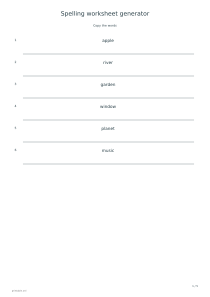
Print a set of visual word puzzles with answers, or arrange your own words into a custom rebus. Choose a layout, preview the sheet and save a reproducible puzzle collection.
Live preview210 × 297 mm
A4
Preview is scaled to fit. The PDF keeps the exact dimensions.
PDF and Print include all pages. PNG and SVG save the page shown.
For true-size printing: choose 100% / Actual size, match the paper size and turn off headers and footers. Printing guide ↗
Ready for your printer
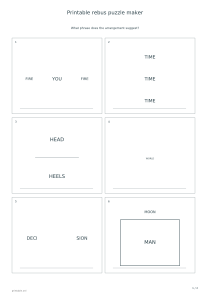
A rebus uses the position, size or repetition of written words to suggest a phrase. Solving one means looking at the arrangement as well as reading the letters. The ready collection offers six examples in the page language, while the custom editor lets you build a single visual clue for a classroom, family game or short discussion.
💡A few useful answers
What does a new variant change?
In ready mode it changes the order of the same six native-language puzzles. The clues and intended answers remain paired. It does not create new idioms or replace the collection with unseen content. Save the variant number with your worksheet if you want another copy in precisely the same order.
Can I enter a phrase instead of a single word?
Short text can be used within the twenty-grapheme limit, but spacing and line wrapping may make the intended relationship harder to recognize. Begin with one compact word in each field and inspect the preview. The split layout separates the first entry into two parts; it does not automatically find a meaningful linguistic division.
Will every solver give the printed answer?
Not necessarily. Visual clues can admit more than one reasonable reading, and idioms are not equally familiar to everyone. The answer sheet records the authored or user-entered intention. Use it to explain the relationship and accept a defensible alternative when it fits the same visible arrangement.
Read the arrangement before guessing the phrase
✏️The ready collection contains six authored puzzles, not an endless stream of newly invented riddles. Changing the variant number rearranges those same six examples. This is useful when preparing differently ordered sheets for a group or returning to a collection without keeping the original question numbers. The optional answer sheet follows the same order as the questions.
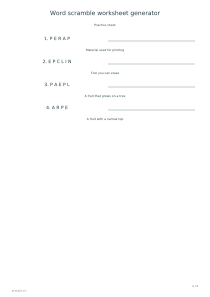
Look for a relationship that can be spoken aloud. A word above another may suggest over or above; a word inside a labeled box may suggest in or within. A repeated word can represent a count or recurrence. Unlike a word scramble, the task usually depends on where complete words appear rather than rearranging their individual letters.
Create a clue with a clear visual relationship
Custom mode creates one puzzle from your first word, an optional second word and the layout you choose. Above, inside and between use both words. Three repetitions, split word and small word use the first word alone. Keep the wording short enough that the visual relationship stays obvious; each word field accepts up to twenty grapheme clusters.
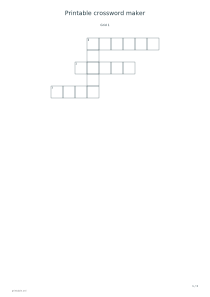
Write the intended answer yourself when you want it included on the custom answer sheet. The generator does not infer a phrase from your words or judge whether the riddle is fair. Test the clue with someone who has not seen the answer. If a phrase needs a conventional definition instead of a visual relationship, the crossword maker may be a better format.
Use the answer sheet to discuss interpretations
📝A good answer should explain an observable part of the clue. Ask a solver to identify what made them think of the phrase, rather than treating a different but reasonable interpretation as a careless mistake. Idioms and wordplay vary by language and experience, so a familiar arrangement may still need explanation for a learner meeting the expression for the first time.
Print the question sheet separately from its answers when using the puzzles as an activity. Keep both pages together in your own copy for discussion afterward. Follow a word-focused session with spelling and word-recognition practice when learners need more work on the written forms. The rebus editor is a layout tool; it does not assess reading ability or assign a measured difficulty level.
Printable rebus puzzle maker
Six ready puzzles with solutions
Select the ready collection, variant 17 and answers on A4 portrait. The document contains six visual puzzles on one question sheet and their matching answer sheet. Keep the second page aside while participants solve, then use it to discuss how position, repetition or size creates each clue.
Keep the ready collection but choose variant 31 and turn answers off. The export contains one sheet with the same six puzzles in a different order. This is a reproducible rearrangement for another group, not six additional clues or a claim that one ordering is more difficult.