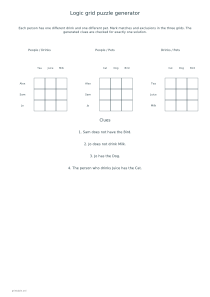
Match fictional people with drinks and pets using written clues and three deduction grids. Choose three or four items per category, a reproducible seed and optional solution pages.
Live preview210 × 297 mm
A4
Preview is scaled to fit. The PDF keeps the exact dimensions.
PDF and Print include all pages. PNG and SVG save the page shown.
For true-size printing: choose 100% / Actual size, match the paper size and turn off headers and footers. Printing guide ↗
Ready for your printer
Each person has exactly one drink and one pet, and every item in a category is used once. Read the clues, mark confirmed matches and cross out impossible combinations. The generated set is checked against all assignments of the two categories to ensure that exactly one complete solution satisfies the clues. Standard and guided modes change the amount of direct support without changing those basic rules.
💡A few useful answers
How is a unique solution checked?
The generator tests the possible drink and pet assignments against every generated clue. It accepts the puzzle only when one complete assignment remains. Each item is used once, so the search checks the same matching rules described on the worksheet.
What does guided support add?
Guided mode adds direct person-to-drink matches to the verified clue set. These extra facts can make the initial deductions easier to locate. It does not change the fictional categories, add a fourth category or turn the sheet into a scored assessment.
Does the key show a solving sequence?
No. It shows the final positive matches in the three grids alongside the same clues. A learner can compare the completed relationships, but the key does not prescribe the order of deductions or explain every exclusion made while solving.
Track three related categories
✏️The three grids compare people with drinks, people with pets, and drinks with pets. A match in one grid can therefore affect the other two. If a person is paired with a particular drink and pet, those two items must also be paired in the third grid. Mark one positive match in each row and column of a completed grid, since the puzzle uses every category item exactly once. Repeated choices are not allowed.
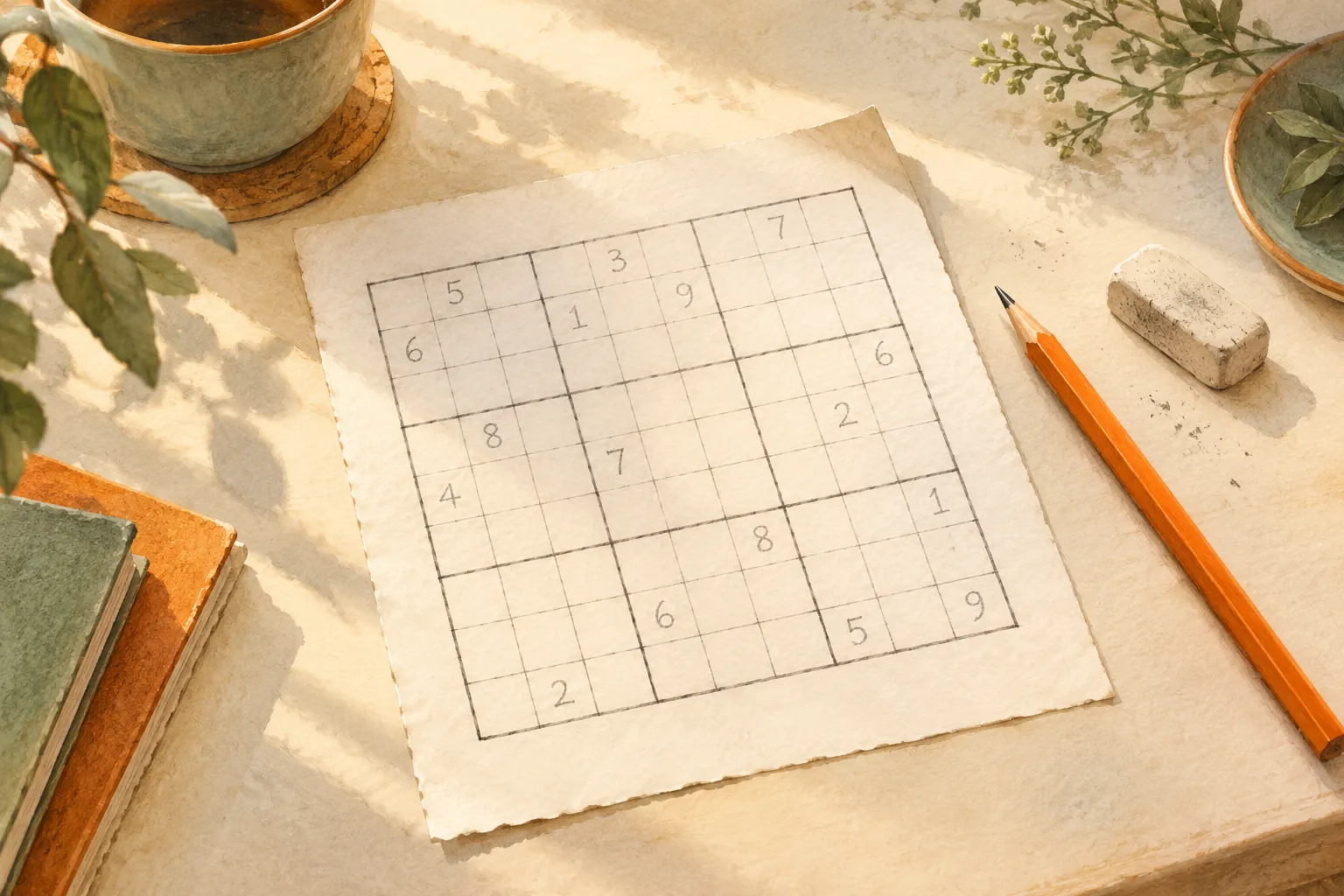
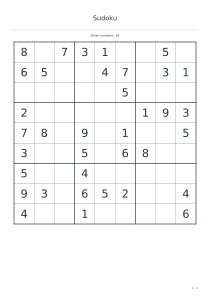
Clues may state a direct match, rule out a pairing, or connect a drink with a pet without naming the person. Read each sentence literally. A negative clue removes one possibility; it does not immediately identify the remaining match unless other possibilities have already been excluded. The names and theme words are localized fictional labels, not descriptions of real people. The Sudoku generator offers another puzzle based on keeping a set of possibilities consistent.
Use clues consistently across grids
Three items per category create a smaller deduction space. Four items add more possible assignments and larger grids, but the editor does not label that change as a tested age or difficulty level. Guided mode adds direct drink matches to the generated clue set. These extra clues can make a starting point more visible without replacing the need to connect the categories. Standard mode retains a compact set of clues sufficient for uniqueness.
The seed reproduces the same assignments and clue choices. The generator enumerates permutations of drinks and pets, filters them by the clues and verifies a single remaining assignment. It also removes clues that are unnecessary for uniqueness before adding the optional guided support. That check proves the uniqueness of the formal matching problem; it is not a promise that every learner will find a particular human deduction path equally easy.
Check the complete matching solution
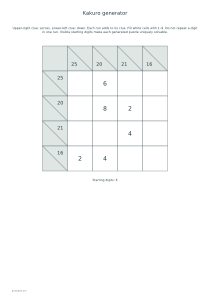
📝Work with a consistent marking convention, such as a circle for a match and a cross for an exclusion. When a row has one match, eliminate the other cells in that row and the corresponding column. Then check what the same fact means in the other grids. Keep the written clues visible rather than relying on memory. The Kakuro editor provides a different constraint puzzle if the next activity should use arithmetic clues instead of verbal relationships.
With answers enabled, a separate page repeats the clues and marks the positive matches in all three grids. It is a completed matching key rather than a step-by-step explanation of a solving strategy. PDF and Print include task and key; SVG and PNG use the selected page. Share retains the item count, support and seed. For a larger group puzzle activity, the paper escape-room trail links several different tasks in an ordered sequence.
Logic grid puzzle generator
A three-item standard puzzle
Choose three items per category, Standard support and seed 17. Enable answers on A4 portrait. The first page contains the three matching grids and clues; the second repeats the puzzle with the verified positive pairings marked.
Choose four items per category, Extra direct matches and seed 31, keeping answers enabled. The two A4 portrait pages use larger category sets and additional direct clues. Compare the same person’s drink and pet across all three grids when checking the key.